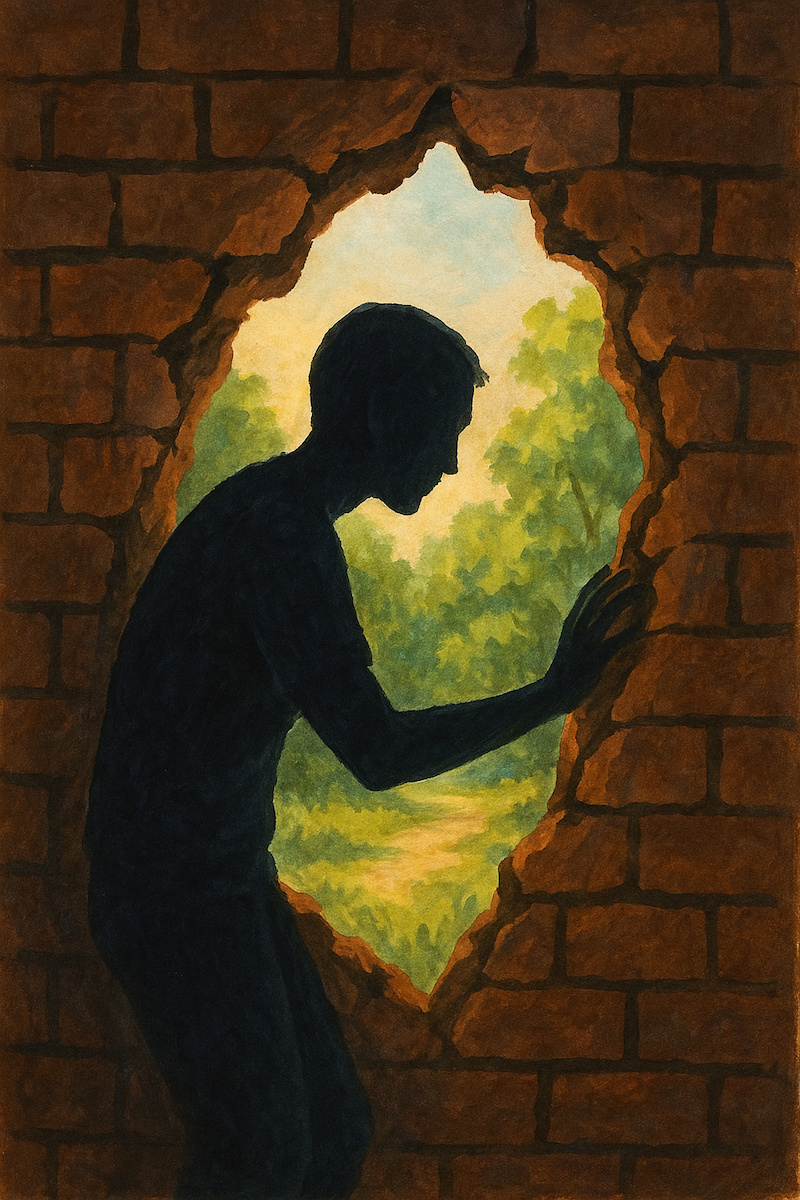
I don’t know how you have experienced the topic of addiction, but for me it has always been loaded with emotions: shame, guilt, helplessness, fear. For a long time, I saw addiction as a weakness, as an inner battle people lose control over.
Then I read “Behind Addictions” by Cece Sykes, Martha Sweezy, and Richard C. Schwartz — and everything I thought I knew about addiction changed.
The book revealed something incredibly liberating:
addiction is not the problem itself — it’s a signal. An inner protection mechanism. An imperfect strategy born out of pain.
And that’s where true healing actually begins.
Why Do We Become Addicted? A Perspective That Changes Everything
The book uses the IFS model (Internal Family Systems) — a therapeutic approach that sees the mind as an “inner family.”
It may sound metaphorical, but it’s remarkably accurate. According to the authors, each of us is made of different “parts,” each with its own voice and intention:
Managers – the parts trying to keep everything under control
They handle perfectionism, self-criticism, responsibility on overdrive. They work hard to prevent inner chaos.
Firefighters – the parts that jump in when things hurt too much
They drive compulsive behaviors like drinking, emotional eating, binge-watching, overworking, gambling, or toxic relationships.
Not because they want to destroy us, but because they are desperately trying to numb unbearable feelings.
Exiles – the parts carrying old emotional wounds
These are the vulnerable parts that hold childhood pain, shame, fear, abandonment, rejection, or trauma.
When exiles surface, it hurts.
When it hurts, the firefighters intervene.
When firefighters intervene, addiction appears.
Not because you are weak — but because a part of you is trying to survive.
This is one of the most powerful insights of the book.
The Self: The Inner Leader That Can Heal Addiction
Perhaps the most beautiful concept in IFS is the Self — the inner core of calm, courage, compassion, curiosity, and clarity that every person possesses.
Sometimes it gets buried under emotional chaos, but it never disappears.
According to the book:
healing addiction doesn’t come from discipline or force, but from accessing the Self.
When you learn to view addiction with gentleness — as a message from a hurting part — something shifts.
The inner system softens.
Managers become less harsh.
Firefighters feel less pressure to react.
Exiles can finally be seen without overwhelming you.
And addiction… begins to lose its power.
What Touched Me Most About This Book
✔ It shows you that you are not “broken.”
✔ Every behavior has a purpose.
✔ Addiction is a cry for help, not self-destruction.
✔ Healing requires compassion, not punishment.
✔ You can listen to your inner parts without fear.
This book doesn’t just offer information — it offers a map for inner healing. It teaches you how to speak to yourself differently.
Why I Recommend This Book to Anyone Affected by Addictions (Directly or Indirectly)
Because it:
- provides one of the most humane, non-shaming perspectives on addiction;
- offers practical therapeutic tools anyone can use;
- helps you understand the true emotional roots of compulsive behavior;
- shows that healing comes from reconnection, not control;
- transforms shame into curiosity and self-understanding.
Even if you don’t struggle with a major addiction, the book helps you understand emotional eating, scrolling, procrastination, overworking, or seeking constant validation.
Conclusion: What Is Really Behind Addictions?
A part of you that was hurting.
A part that found the only way it knew to cope.
“Behind Addictions” shows that healing begins when we learn to listen — with gentleness, courage, and compassion.
For me, it was one of those books that doesn’t just explain things — it transforms.
And I believe it can do the same for you.