Ana is sitting on the couch, phone in hand. It’s 2 a.m., and she can’t sleep. Normally, she would have sought the support of a psychologist, but tonight she chose something else: a chatbot that promises “instant therapy.” The responses come quickly—precise, almost mechanical, yet comforting. Ana feels that someone—or something—is listening.
This is not just an imaginary story. It is the reality of a world in which algorithms are beginning to enter the intimate space of mental health. AI-powered apps and platforms promise to detect depression, anxiety, or burnout—sometimes before the patient even becomes aware of the problem.
Promises That Sound Too Good to Ignore
On paper, the advantages are striking: 24/7 access, personalized recommendations, reduced stigma. For people like Ana, who live in small towns or have schedules impossible to align with traditional therapy, these applications can feel like a lifeline.
“It’s like someone is always there for you,” Ana writes in a message to the chatbot. The algorithm replies with simulated empathy and questions that push her to reflect more deeply on her own emotions.
The Hidden Risks Behind the Screen
But behind these promises, the risks are quiet. Every message Ana sends is collected, analyzed, and stored. Sensitive data about her emotional state could end up in places it was never meant to reach.
More troubling still, the algorithm does not understand the subtle nuances of human suffering. It can misinterpret messages or minimize severe symptoms. There are documented cases in which automated recommendations were insufficient—or even dangerous—for people in emotional crisis.
Ana feels the comfort of quick responses, yet somewhere deep in her mind, a warning signal flickers: maybe this is not enough. In an ideal world, AI would be only a temporary companion, not a substitute for the empathy and experience of a human specialist.
A Collaboration Between Humans and Algorithms
The future of mental health could, however, be brighter if we learn to use algorithms wisely. Instead of replacing therapists, AI can become a complementary tool:
- Monitoring patient progress between sessions
- Early detection of mood changes
- Expanding access to isolated or underserved communities
Patients like Ana could benefit from a blend of technology and human care: an algorithm that detects patterns, and a specialist who interprets real emotions.
Conclusion
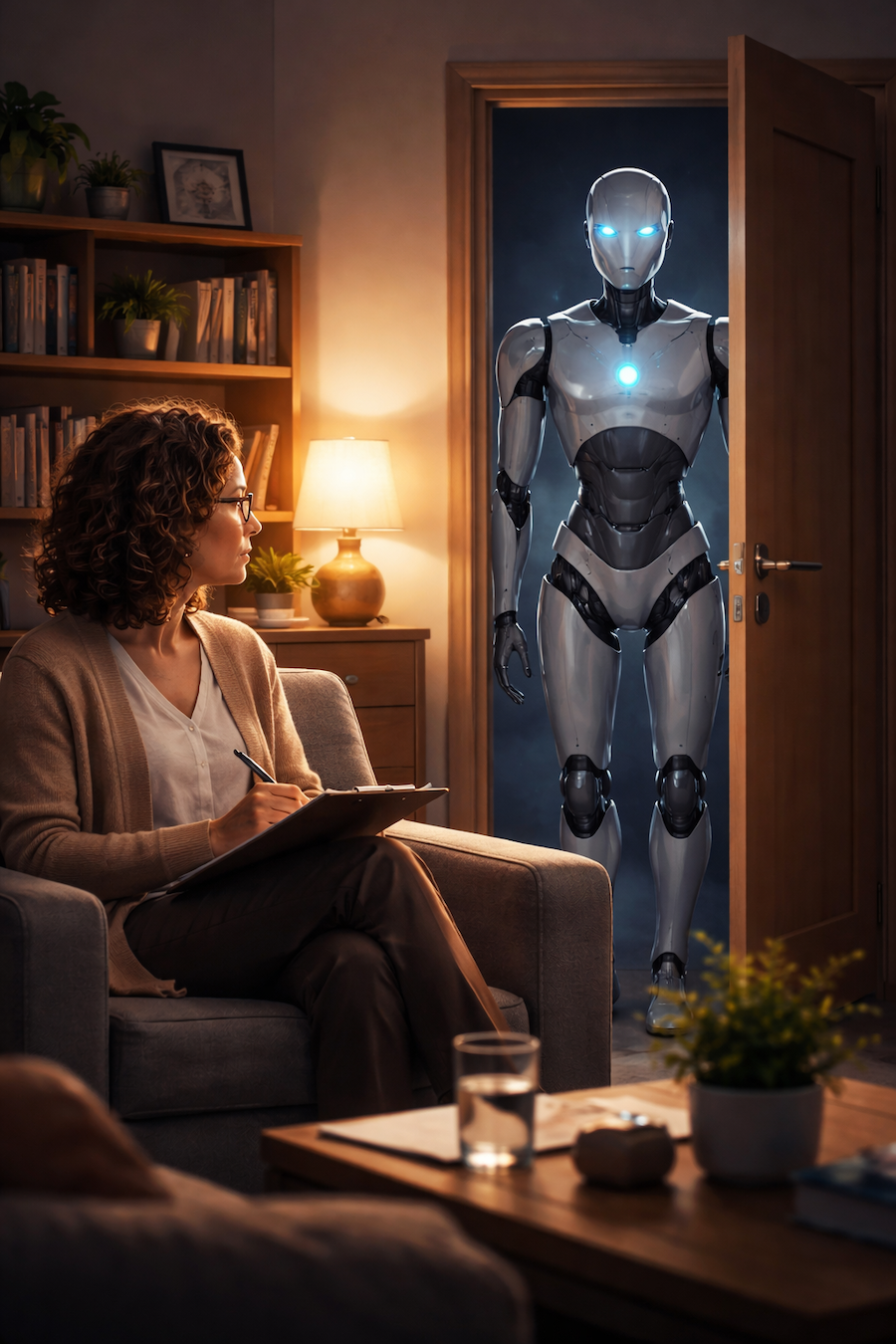
When the algorithm knocks on the therapist’s door, we must remember that what the patient receives is only half of the equation. The other half is our responsibility—as developers, therapists, and as a society—to preserve care, confidentiality, and empathy.
Ana closes her phone, feeling a faint sense of calm. The algorithm was there for her tonight, but she knows that true connection—the kind that truly heals—still belongs to human beings.
In an era where data and code enter the rooms of our thoughts, the challenge is not merely technological. It is profoundly human: how do we ensure that as algorithms touch our mental lives, we remain connected to one another?